
On the Apple Newton and Openclaw
Amara's Law is still in effect
In my last missive, I said that Moltbot is the future of real estate… and that it should scare the living daylights out of you.
I still stand by that claim. However, I spent the weekend messing around with Moltbot (now fully renamed Openclaw so I’ll call it that going forward) and have some further thoughts.
TL;DR: Yes, this is the future, but it probably isn’t around the corner.
This will be a public post since I am merely sharing my own experiences and speculations rather than any particular insights and recommendations.
The Apple Newton
First, I have to sidetrack to a story.
It was the summer of 1994 and I had just quit my job at a hedge fund (which in retrospect, I should never have done since that fund was/is D.E. Shaw & Co., one of the largest and most successful quant funds in the world) to take a job as a entry-level salesman at Bergdorf Goodman. Yes, you read that right. I left high finance to sell suits to rich guys. Really long story behind that, which if you ever find me at a bar somewhere, you can buy me a drink and I’d be happy to tell you.
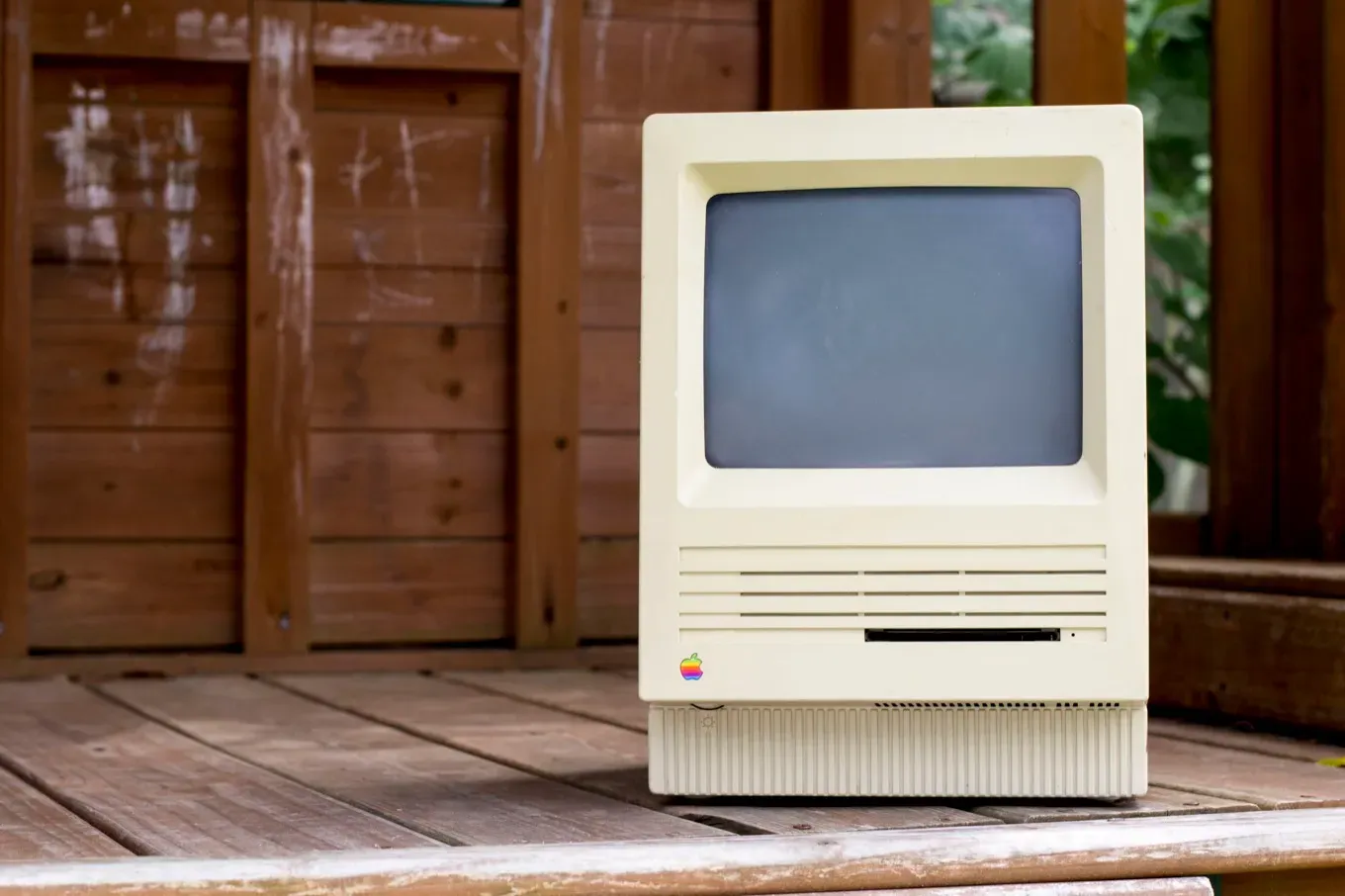
In any event, I was a bit of a techie back then (I actually worked in DESCO’s IT department while learning finance—again, another long story) despite not having a technology background. I knew about the Internet, for example, back in 1993, was comfortable with UNIX, and so on. Of course like so many of us, I absolutely loved my Macintosh SE from college.
As a brand new salesman selling extremely expensive clothing to very wealthy people, I was trained from day one about client books. Your survival and success then (and likely now) in high fashion wasn’t about how you helped some random person off the street: “Can I help you?” is never, ever the correct opening. Your survival depended on being able to form rapport with someone while helping, then get their information and build a relationship with them. Over time, you wanted to build a “client book” which was quite literally a book with paper profiles on every client you ever helped.
Then, you wanted to call them or write personal cards or whatever to stay in touch, inform them about trunk shows or special sales or whatever, and hope to get them into the store to shop with you.
I’m sure that sounds incredibly familiar to every person in real estate right now.
In any event, I started to build my client book, frankly because I was young, didn’t know shit, and didn’t know enough to be embarrassed. It was exciting. But the paperwork bothered me; always has, always will.
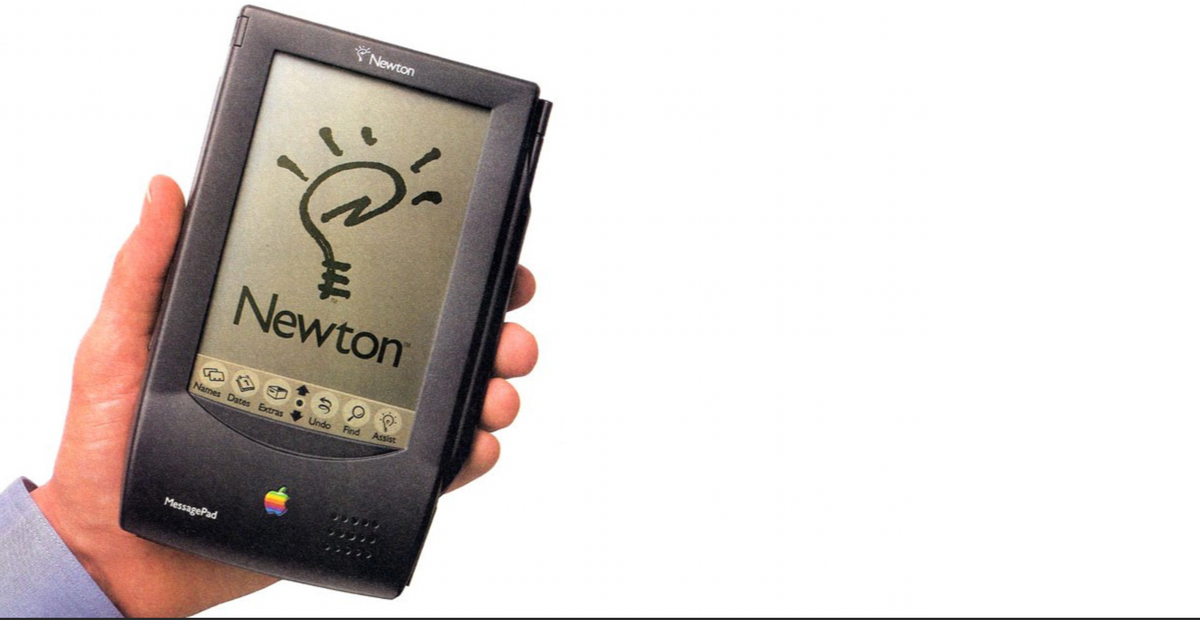
Well, one day I see this ad—maybe a commercial?—for a brand new technology called the Apple Newton, a “personal digital assistant.” The marketing for it was dazzling.
Since I already used my Macintosh at home for everything I could, and I already knew about email, already knew about the Internet, the thought of using a Newton to replace my client book was tantalizing. I could store detailed records for every client, their sizes, their color preferences, their favorite brands, birthdays, anniversaries, take notes (by writing them) and link those to their profiles. I could group customers into different buckets: “Wall Street” or “Industrialists” or whatever.
The Newton was going to change everything, and I would change the way that fashion retail was done!
That was 1993; the Newton was expensive as hell. $900 is a lot today; it was about $1,800 back then. I bought one. And used it for weeks, months. It didn’t quite work. Ultimately, it failed—and the various reasons for its failure are quite well documented.
However, there is no doubt in anybody’s mind that the Newton was the prototype for a new kind of personal computing device that became the iPhone. Every one of us now carries around a personal digital assistant we just happen to call a phone despite the fact that making and receiving calls is probably one of the things we do least with it.
I feel the same way about Openclaw.
Openclaw is the Newton of AI Assistants
Having played with it all weekend, I am coming to the belief that Openclaw is quite likely the Newton of AI Assistants: innovative, way ahead of its time, world-changing… but not because it will change the world. The products that follow it, that learn from it, that are inspired by it, will.
In my original post I wrote:
There is no question in my mind that the big hit of 2026 will be Moltbots for real estate agents. If you have any kind of programming or technical skills, I am telling you that you will make a fortune providing Moltbots and configuring them for real estate agents, with certain key skills already pre-configured.
Listen to what Alex Finn said. Imagine a morning brief for the agent that lists out all of her appointments for the day, all of the tasks, and oh by the way, the bot emailed all of your sphere last night with a new market update that it wrote itself using your voice, and two people have already responded.
I stand by the claim that techies can make a bunch of money helping real estate agents install and configure Openclaw assistants. Maybe not a fortune, but quite a bit of money—in the same way that in the early days of the internet, quite a few people who knew HTML made money, made entire businesses, setting up websites for real estate agents.
Just like the website, it will be the 10-15% early adopters who jump on the Openclaw thing and figure out how to use it, and how not to use it.
I wrote:
Today, the Moltbot phenomenon is limited to people with some level of technical skills. Developers, vibe-coders, people who speak programming to some extent. Setting up a Moltbot may be simple and easy for a techie; it is far beyond my ability or the ability of normies to do so.
Having actually tried it, I can confirm. Let’s just say that setting up an Openclaw is not for the faint of heart, nor is it for the technologically dense. I think I’m pretty savvy when it comes to technology, but I am no coder and do not know my way around Ubuntu and gateway settings and network security.
Most agents are not techies; in fact, the average real estate agent is a 58 year old white woman. The agents who maybe came out of tech and really know their way around will install and use Openclaw to leverage their businesses, but the average real estate agent/broker I have met… simply won’t.
One reason is security. Openclaw is now being called a security nightmare by a ton of computer and cybersecurity professionals. An autonomous agent that can email all of your sphere can also email them something you really don’t want emailed. It can be hacked via prompt injection, by vulnerable ports, and so on. Hackers can use it to download personal information from the computer where it is. Reports are starting emerge that Openclaw can cost you a ton of money from using up tokens on Big AI models like OpenAI and Anthropic. If you’re not careful, you could end up running up hundreds or thousands of dollars in token costs.
Openclaw is, in short, not ready for prime time. It is not ready for the non-technical to just plop onto his laptop and fire up.
But Openclaw is the Newton of AI assistant because it is the first. It is dangerous, high risk, and expensive. But it is also powerful, innovative, and points the way to what is coming.
Amara’s Law & Real Estate
“We tend to overestimate the effect of a technology in the short run and underestimate the effect in the long run.”
Roy Amara was an American futurist, scientist, and longtime president of the Institute for the Future (IFTF) in Palo Alto. He came up with the saying above, which is sometimes called Amara’s Law. Bill Gates has said something very similar, that we overestimate the impact of technology over the next two years, but underestimate the impact over ten years.
Classic examples include personal computers (Ken Olsen of DEC famously said, “There is no reason for any individual to have a computer in his home"), the internet itself, mobile phones, electric vehicles, and so on.
AI is clearly subject to Amara’s Law as well. Moltbook is probably not The Singularity. It is not, as far as I can tell, Skynet.
Applied to our industry, Openclaw will not change much at all in the short term. We’re not likely (I’ll bet against it) to see one agent using 100 Openclaw assistants to do 5,000 deals. I don’t see it. We’re not likely to see the end of buyer agents, or the MLS, or anything like that.
Everybody relax.
However, Openclaw—or more likely, the prime-time-ready successor that some Big Tech company will ship—will change everything. Newton changed nothing; iPhone changed everything.
The path forward that Openclaw lighted up remains the path. I don’t see how that future does not come into play. To wit:
- Big Tech will introduce AI personal assistants that are secure, that are plug-and-play, that won’t cost a fortune to operate.
- AI Agents will communicate with and network with other AI Agents. Moltbook is not Skynet, but it points the way forward to how these things will collaborate. The owners will allow it, even encourage it, because their personal AI assistant will likely learn from and improve by “speaking” with other AI assistants.
- Every American, and probably every adult citizen of Earth, will have an AI assistant or two or two hundred.
- In real estate, FSBO will be replaced by FSBAI. In fact, agent-assisted sales will also be replaced FSBAI.
None of us are ready for that world. Not today.
The good news, however, is that because of Amara’s Law, that day is not tomorrow or next week. We have time. The bad news is that because of Amara’s Law, we don’t have all the time in the world, and more importantly, we do not set the schedule. The real estate industry does not get to dictate to the rest of society when and how next-gen AI Assistants will be allowed to come into being and what their capabilities will or will not be. We just get to react and either be ready for it, or not be ready for it.
Openclaw itself is likely to fail, just like the Newton failed. Some people will point and say, “See? Nobody wants a personal digital assistant!” Others will look and see the iPhone coming over the horizon and prepare accordingly.
I know which I want to be. So I’ll go back to wrestling with dockers, config files, SSH tunnels, and a hundred other things I don’t know and don’t really want to know. Not because Openclaw is the best thing since sliced bread, but because it is the first real prototype of something enormous important coming.
I did, after all, buy a Newton in 1994.
-rsh